SCADA and Remote Monitoring: Smart Management of Industrial Processes
SCADA (Supervisory Control and Data Acquisition) and remote monitoring systems are advanced technologies used to monitor, control, and manage critical processes in industrial operations. These systems provide real-time data collection and analysis for efficient production and facility management. SCADA allows for centralized management of machines and processes, while remote monitoring enables system status tracking from anywhere. This page explains how SCADA and remote monitoring systems work and the benefits they offer to industry.
SCADA is a system used to monitor, control, and manage processes in industrial facilities. Data is collected through sensors, and this data is analyzed to check whether the machines are functioning correctly. The SCADA system detects faults early and sends notifications to operators. These systems ensure the efficient operation of production lines, power plants, water treatment facilities, and many other industrial systems.
Remote monitoring is the process of monitoring data through SCADA systems via the internet or private networks. This technology allows production lines to be tracked and controlled from anywhere. Remote monitoring ensures that faults in the system are quickly detected, saving time and costs. Additionally, it enables businesses to operate more efficiently and flexibly.
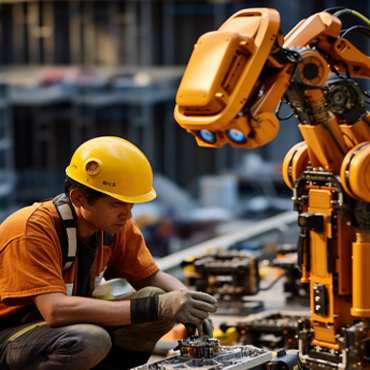
In machine manufacturing, SCADA systems monitor production processes, check the operational status of machines, and instantly send fault notifications, preventing disruptions in production. SCADA provides the ability to control each machine on the production line from a central point, helping ensure the continuous efficient operation of machines. As a result, maintenance costs are reduced, and production time is used effectively.
Our work benefits
SCADA and remote monitoring systems collect data from devices and machines through sensors. This data is monitored and analyzed through a central control point. SCADA systems enable remote monitoring and control of devices, allowing for early detection of faults and optimization of processes. Remote monitoring, on the other hand, enhances operational efficiency as maintenance and management tasks can be performed remotely.
- Remote Control
- Data Analysis
- Performance Improvement
- Real-Time Monitoring
HOW WE PRACTICAL
Our Work Process
In the initial phase, feasibility studies are conducted to determine the needs of SCADA and remote monitoring systems. Suitable solutions are designed, taking into account the existing production lines and facility requirements.
- Needs Analysis
- Feasibility Studies
- Risk Assessment
In the design phase, the architecture of the SCADA system, along with software and hardware integrations, is carefully planned. The necessary network infrastructure and device placements for remote monitoring are designed.
- Custom Solution Development
- Software and Hardware Design
- Simulation and Testing
The sensors and devices in the system are integrated with SCADA software. The remote monitoring infrastructure ensures the compatible operation of data transmission and control mechanisms.
- System Integration
- Data Flow and Connections
- Testing and Adjustments
People with ideas and experience to develop a vision for the future. We are integrated engineering company composed of a group of agile and experienced engineers skilled in different scopes of engineering work Assured plant availability and operational security.
- System Commissioning
- Real-Time Monitoring
- Continuous Improvement
For SCADA and remote monitoring systems to function correctly, factors such as network security, data accuracy, and infrastructure compatibility are crucial. Therefore, the entire system must be carefully configured and regularly maintained. Additionally, calibrating the sensors and updating the software enhances the system's reliability.
SCADA systems collect and analyze real-time data, predicting machine failures in advance and identifying disruptions in processes. Remote monitoring systems, on the other hand, enable data-driven decision-making, optimizing production processes and enhancing operational efficiency.
SCADA and remote monitoring systems can be customized according to the needs of each production line. In machine manufacturing, the role of SCADA is critical for tasks such as monitoring machine performance, fault detection, and process optimization. Remote monitoring, on the other hand, is essential for continuous system monitoring and quick interventions.